
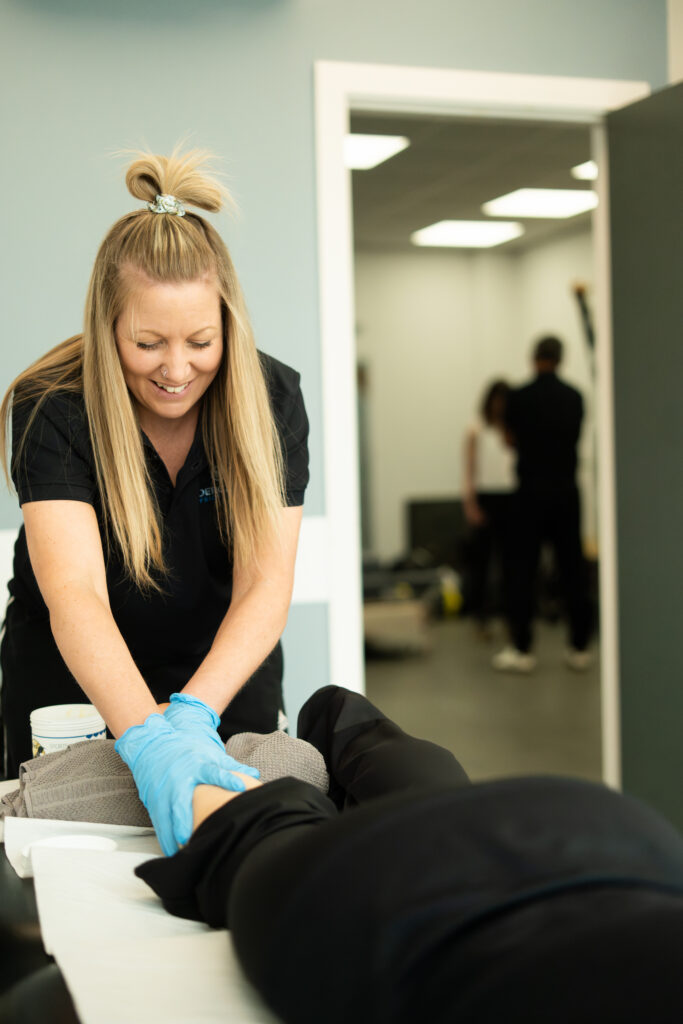
Recurring pain is surprisingly easy to put off dealing with. “I’ll get it sorted after Christmas.” We hear versions of this a lot at this time of year.
- That knee has been niggling for a few weeks, but you can still walk on it.
- Your back keeps playing up, but it settles eventually.
- Your shoulder hurts when you reach overhead, so you’ve just stopped doing certain things.
- And with Christmas getting closer, work getting busier and diaries filling up, it’s very easy to decide you’ll deal with it in January.
But there’s a question worth asking: What are you going to stop doing between now and then? Because pain doesn’t always mean life comes to a complete halt. Often, we simply start adapting around it.
Pain can quietly change what you do
- You shorten the dog walk because your knee starts hurting after 20 minutes.
- You stop going to the gym because your back doesn’t feel right.
- You avoid lifting something with one arm because of your shoulder.
- You turn down the longer weekend walk.
- You get someone else to carry the shopping.
None of those changes feels particularly significant on its own. But gradually, the problem starts deciding what you do. And that’s when an occasional niggle can begin to feel like your new normal.
At Indergaard Physiotherapy, we don’t think the goal should simply be learning to put up with pain. We want to understand what’s happening and what it is stopping you doing.
When does a niggle become something worth checking?
Not every ache needs physiotherapy.
Bodies get sore. Muscles can ache after doing something new and many minor problems settle with time and sensible movement.
But if the same problem keeps returning, isn’t improving or is beginning to change your everyday life, it may be worth getting it assessed.
Ask yourself:
- Has it been there for several weeks?
- Does it keep disappearing and coming back?
- Is it gradually getting worse?
- Are you avoiding particular movements or activities?
- Have you changed how you exercise because of it?
- Is it affecting your work, sleep, walking or everyday life?
- Have you started saying, “I just have to live with it”
- If you recognise yourself in that list, waiting for a date on the calendar may not change the problem.
Understanding it might.
Why an assessment comes first
When you come to Indergaard, we don’t start with the treatment. We start with you.
Your physiotherapist will want to understand what has been happening, how long it has been going on and what makes it better or worse.
Just as importantly, we want to know what the problem is stopping you doing.
Depending on your symptoms, your assessment may look at areas such as your movement, strength, mobility and function.
We can then explain what we find and agree an individual treatment and rehabilitation plan based on your needs and goals.
That matters because two people can arrive with pain in exactly the same area and need very different approaches.
The painful bit is only part of the story.
Treatment should have a purpose
At Indergaard, treatment isn’t about choosing a piece of equipment or a technique first and fitting the patient around it.
It starts with the assessment. Depending on what we find, your treatment plan may include:
- Hands-on physiotherapy
- Individual rehabilitation and strengthening
- Movement re-education
- Shockwave Therapy
- Laser Therapy
- Sports Massage
- Physio-led Pilates or Reformer Pilates
Not everybody needs the same treatment and not every treatment is appropriate for every problem. The treatment is chosen for you, based on what we find and what we are trying to help you achieve.
What about Shockwave Therapy?
Shockwave Therapy is one of the treatment options available at Indergaard and may be appropriate for certain persistent tendon and musculoskeletal problems.
But it isn’t something we simply recommend because pain has been there for a long time.
We assess the problem first.
If Shockwave is appropriate, it can form part of a wider treatment and rehabilitation plan rather than being viewed as a standalone fix.
Ove Indergaard is a Specialist and Educator in Shockwave Therapy, so the technology is used alongside clinical assessment and rehabilitation expertise.
Where does Laser Therapy fit?
Laser Therapy is another treatment option available at Indergaard that may be used for pain management and to support treatment for certain conditions.
Again, the important word is appropriate.
Your physiotherapist will consider your symptoms and assessment before recommending the treatment options that may be suitable for you.
Technology can be useful. But it doesn’t replace understanding the person and the problem first.
And Sports Massage?
Sometimes the issue isn’t an injury at all.
A busy period at work, hours spent driving, a change in training or simply doing more than usual can leave muscles feeling tight, tired or uncomfortable.
Sports Massage may be useful as part of recovery or for managing muscle tension.
And despite the name, you certainly don’t have to be an athlete to benefit from it.
But if the same pain keeps returning or is affecting how you move, an assessment may be more appropriate than repeatedly treating the area that feels tight.
If you’re unsure which appointment you need, ask us.
Keep moving through winter
One of the easiest things to lose during winter is routine.
- Dark mornings make the early walk less appealing.
- Cold evenings make the sofa considerably more attractive.
- Busy weeks mean exercise is often the first thing to disappear from the diary.
- But movement still matters.
You don’t need an elaborate winter fitness plan.
- Walk when you can.
- Keep some strength work in your week.
- Move regularly if your job involves sitting for long periods.
- Use Pilates or structured exercise to work on strength, mobility and balance if that suits you.
- And if pain is making movement difficult, find out why rather than simply stopping.
The aim is to keep you doing as much of your normal life as possible.
Don’t wait for January to start looking after yourself
- January gets a lot of attention.
- New Year. New routine. New goals.
- But your body doesn’t know it’s November.
- If something has been bothering you for weeks, there’s no particular benefit in waiting for 1 January before finding out what’s going on.
That doesn’t mean every ache needs treatment immediately.
It means paying attention when a problem keeps returning or starts changing how you live.
At Indergaard Physiotherapy, we’ll listen to what has been happening, assess the problem and explain what we find.
Then, if treatment is appropriate, we’ll create an individual plan to help you move forward.
Because the goal isn’t simply to treat the bit that hurts.
It’s to help you get back to walking, working, exercising, gardening, playing with the grandchildren or whatever else matters to you.
So instead of asking: “Can I put up with this until January?”
Perhaps ask: “What would I like to be doing comfortably again?”
That’s a much better place to start.
📅 Book your assessment today.
📍 Leeds & Wakefield Clinics
📞 0113 286 0333
🌐 indergaardphysio.com
Frequently Asked Questions
How do I know when I should see a physiotherapist?
If pain keeps returning, isn’t improving or is beginning to affect your movement, exercise, work, sleep or everyday activities, it may be worth having it assessed. You don’t necessarily have to wait until the problem becomes severe.
What happens at my first physiotherapy appointment at Indergaard?
We’ll listen to what has been happening and what the problem is stopping you doing. Depending on your symptoms, your physiotherapist may assess areas such as movement, strength, mobility and function. We’ll explain what we find and discuss an appropriate treatment and rehabilitation plan with you.
Will I get hands-on treatment?
Hands-on physiotherapy may form part of your treatment where appropriate. Your plan may also include rehabilitation, strengthening, movement re-education or another treatment depending on your assessment.
What is Shockwave Therapy used for?
Shockwave Therapy may be used for certain persistent tendon and musculoskeletal problems. It isn’t appropriate for every condition, so assessment is important before deciding whether it should form part of your treatment plan.
Do I need to be sporty to have Sports Massage?
No. Sports Massage isn’t only for athletes. It may be useful for people experiencing muscle tension or looking for support with recovery from exercise, physical activity or the demands of everyday life.
How do I know which Indergaard treatment I need?
You don’t need to diagnose yourself or choose a treatment before you come in. If you have an ongoing or recurring problem, a physiotherapy assessment gives us the opportunity to understand what’s happening and recommend the most appropriate next step.
About Ove Indergaard
Ove Indergaard is a Chartered Physiotherapist with nearly 30 years’ experience and Gold Accreditation as a Specialist Sports Physiotherapist. He is also a Specialist and Educator in Shockwave Therapy, with extensive experience in musculoskeletal physiotherapy, sports injuries and rehabilitation.